Where to go on a UK winter road trip
Sure, you’ll have to accommodate some changeable weather conditions and the possibility of ice on lesser-travelled roads. But the benefits mean you’ll get a wider choice of quieter campsites and tourist hotspots, emptier towns with more abundant parking and the dramatic scenery only a frostbitten morning can conjure up.
So, when thinking about taking a winter caravan, motorhome or campervan road trip, where’s best to go? This guide will give you several ideal towns to base your trip from, and the kinds of things you can see along the way.

How to think about winter road trips in the UK
Winter trips in the UK can unravel if you plan them too much like a summer holiday, where the weather is more guaranteed (well, as much as that’s possible in the UK!). Instead, you’ll need to make sure your days aren’t so packed that you can’t change them should the weather turn or that you’re finally reaching a viewpoint just as the light fades.
Here are some quick tips to frame your thinking:
- Choose an anchor location: It also helps to think in location clusters rather than distances. Choose a base and explore within 30–40 minutes driving of that place, rather than moving on every day. This helps to ensure that your driving stays relaxed in case of road closures or icy conditions that mean you need to take a detour.
- Choose one anchor activity: A useful way to plan is to give each day one clear must-do activity. That might be a walk, a town you’ve wanted to explore, a historic site, or a long lunch somewhere you’ve been meaning to visit. Then, keep everything else optional. This means you’ll feel like you’ve seen what you came for, even if you run out of time (or useful weather) for anything else.
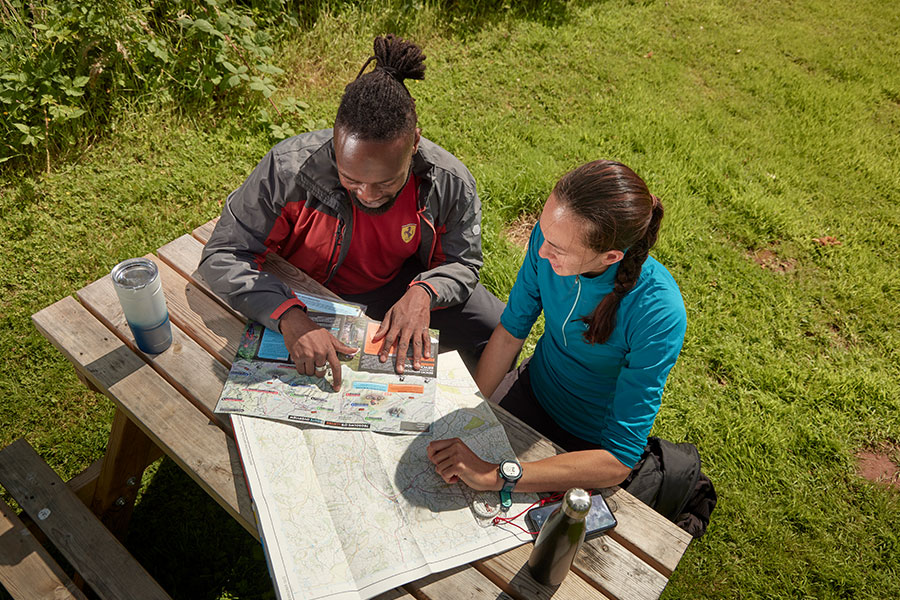
Winter road trip bases that work well
Below you’ll find three UK destinations that work really well for a holiday in the winter months. In each one, you’ll discover a city base, an idea for a campsite or two to stay at, and ideas for how to spend your time with attractions and historic sites.
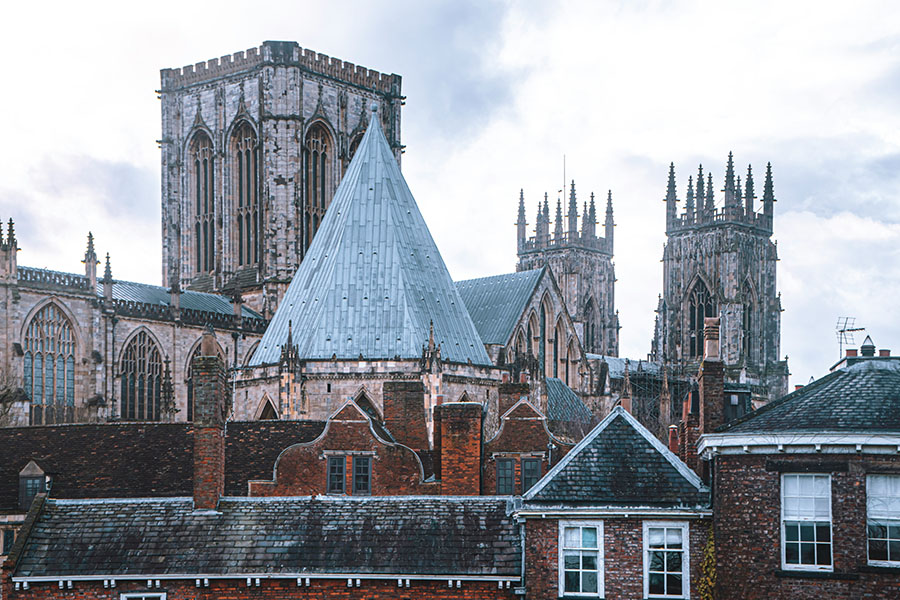
York
York sits in the north of England, in North Yorkshire, roughly halfway between London and Edinburgh. It’s easy to reach from most parts of the UK and works well as a stop on a longer north–south route, or as a short break in its own right.
The city has a long history, shaped by the Romans, Vikings and medieval England. Much of that history is still visible today, from the city walls and narrow streets to larger landmarks like York Minster.
There’s plenty to see without needing to travel far. Historic buildings, museums, independent shops, pubs and cafés are all packed into a relatively small area, so it’s easy to build a full day without feeling rushed: you can walk the city walls, explore the Shambles, visit the JORVIK Viking Centre or the National Railway Museum, and still be close to the centre.
That makes York a reliable base when daylight is short and conditions are mixed.
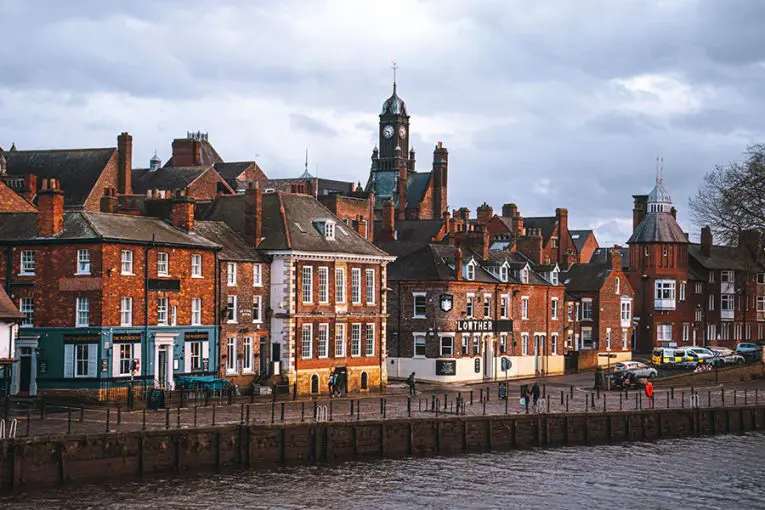
The riverbank in York centre during the winter
York sits low and close to the River Ouse, which means riverside paths and nearby roads can flood after heavy rain.
Checking local flood alerts before heading out can help you avoid last-minute route changes.
York Rowntree Park Club Campsite (Caravan and Motorhome Club)
- Open all year with amenities like a dog walk, shower room and laundry on site.
- Easy access to the city of York via a gate that links immediately to local shops (including some nicely positioned takeaways).
- It’s close enough to the city that you can forget about driving once you’re pitched up (ideal if you fancy some warming mulled drinks), but it still remains rural enough to be quiet.
York Minster
York Minster is a place that works in any season, but winter suits it particularly well. You’re indoors for most of the visit to keep warm and dry, and it rarely reaches the heights of busyness as you can see in the summer.
- When to go: mid-morning
This gives you time to ease into the day while allowing you to avoid any of the late-afternoon rush when daylight fades and temperatures drop. - Opening times: vary by day and season
Some days start later due to religious services that can vary in start times throughout the year, so check in advance before you turn up at a time when you’re not allowed in. - How long to allow: 1.5–2.5 hours
With all the history and religious artefacts, there’s more than enough for you to see. The length of time you’ll spend there depends on how many plaques you like to read and the pace you like to take. Build in more time if you like to sit and contemplate to take in the atmosphere. - A practical note, even on dry days, it can feel slightly chilly inside. So make sure that you bring layers that you can add or remove to adjust your temperature to suit.
York is one of the best spots in the north of the UK for lunch in winter. Most pubs and cafés in the city centre stay open year-round, and there’s plenty of choice within a short walk of the Minster.
A few things to bear in mind:
- Book select times: Winter can actually be busier for lunchtime eating out than the summer. This is because people are looking for an inside place to keep warm. Therefore, aim for lunch around 11:45-12:00 or after 14:00, because this helps you to miss the busiest serving times.
- Grab a window seat: If possible, try to grab a window seat at any restaurant you eat in, particularly if you’re dining in the Shambles area. This gives you the chance to still absorb the vibe of the city while staying in the warmth.
Are there any other easy day trips from York in the wintertime?
Helmsley is a compact market town at the edge of the North York Moors that’s well worth a visit. It’s a good winter option because it’s small enough for you to have a good look around in only a couple of hours. This is ideal to fit within the shorter winter days, and means you can build it around the weather.
A simple winter-friendly plan:
- Take your time along Market Place, Bridge Street and the little lanes off them; Helmsley is known for independent shops, delis and galleries rather than big chains, so it rewards slow pottering
- Instead of a long moorland walk, choose a short, well‑trodden loop like part of the Helmsley Discovery Trail or a there-and-back into Duncombe Park’s parkland, which is highlighted as attractive even in colder months.
- Head to Helmsley Castle, which is a 900-year-old ruin that was later adapted into a Tudor mansion. It sits right next to the central market square, so it’s easy to access, and parts of it get you out of the cold.
- If the weather’s reasonable, there are gentle, well-marked walks close to the town that don’t require you to be particularly fit because there are no steep inclines. If it’s not, the town itself is enough for a relaxed visit.
Where to park in Helmsley
Use signed public car parks rather than trying to squeeze into residential streets. This matters more if you’re in a larger motorhome or towing, as some side roads are tight and not designed for turning.
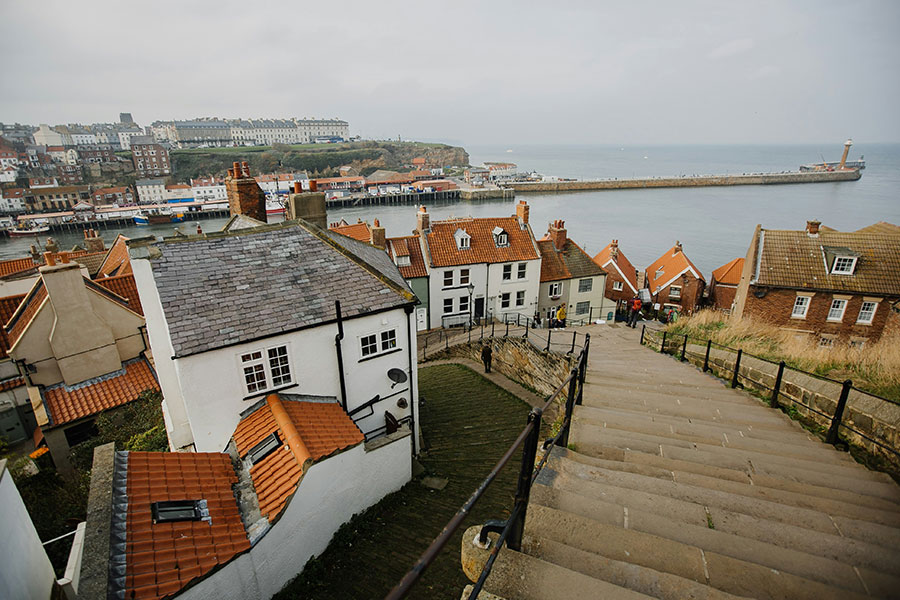
Whitby works in winter for a different reason than Helmsley. Being next to the sea, it does tend to get a little colder, but that’s part of the appeal. Focus your stroll on the old town around Church Street, Sandgate and up towards the 199 Steps, where you get characterful alleys, small shops and better shelter from the wind than on the seafront.
A few practical tips:
- Arrive early because parking fills up even in winter, especially on clear days.
- Dress for the wind, as it’s often breezier than it looks from the car.
- You don’t need to do the Abbey climb or commit to long coastal walks for Whitby to feel worthwhile. Even a couple of hours can be enough before you decide to head back inland.
Bath
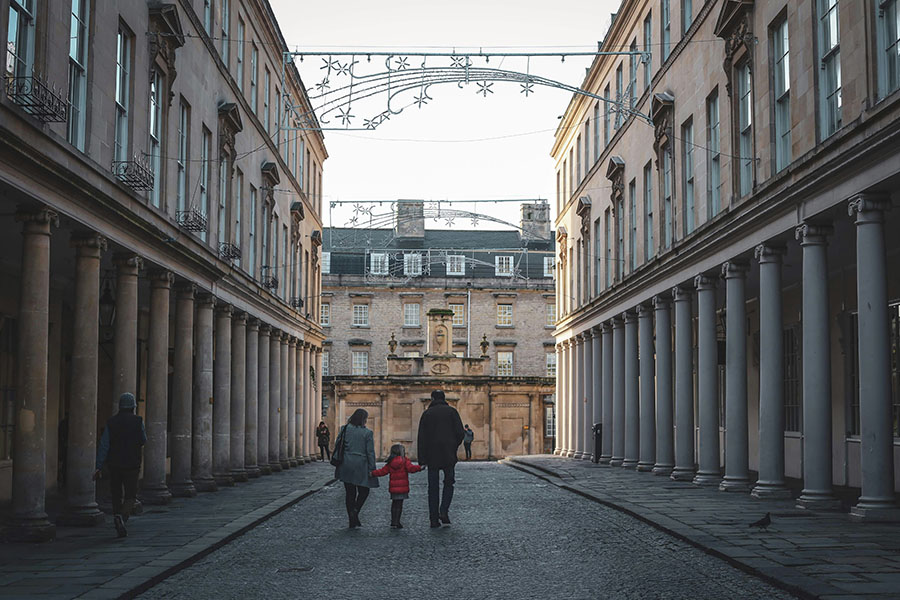
Bath is in the south west of England, in Somerset, just under two hours from London by road. It sits in a shallow valley, surrounded by countryside, but the city itself is compact and easy to navigate once you’re there.
The city is best known for its Roman history and Georgian architecture. Much of what people come to see dates back to those periods, from the Roman Baths themselves to the crescents, terraces and bridges that shape the city today, including the Roman Baths complex, Bath Abbey next door and Pulteney Bridge over the River Avon.
There’s a good mix of things to do within a small area. Historic sites, museums, shops, cafés and restaurants are all clustered around the city centre, which makes it easy to explore without covering long distances; you can go from the Roman Baths to Bath Abbey, then up to The Circus and the Royal Crescent, and still be close to central streets like Milsom Street and Pulteney Bridge.
Bath works well in winter because so much of what you go there for isn’t weather-dependent. Many of the main attractions are indoors and open year-round, from the Roman Baths and Bath Abbey to the Thermae Bath Spa, the Jane Austen Centre and the Holburne Museum, and the city is well set up for slower days, built around food, history and warm places to spend time. With the countryside close by for short trips when conditions allow, such as walks on Bath Skyline or visits to nearby villages, Bath makes a reliable and comfortable winter base.
Many city-centre car parks have height restrictions, which can catch touring vehicles out.
It’s worth checking parking options in advance and planning to park outside the centre, then walk or use public transport in.
- This scenic site was voted the top adults-only site by the readers of Practical Caravan and Practical Motorhome.
- Open all year, and it’s particularly well suited to winter due to having 45 hard-standing pitches that are all set among lawns, shrubs and flower beds.
- This site, despite being quiet, is only a 3 minute walk from the local pub and shop, giving you some great options for supplies or an evening out if you don’t want to go far.
This works well if you want a calmer base outside the city and are happy to plan trips in rather than popping back and forth during the day.
Bath Waterside & Marina Caravan Park
- Open all year, and also ideal for winter stays due to offering 88 hard-standing pitches.
- A great family-friendly campsite situated next to the Bath Marina, meaning there’s lots to see and explore directly from your pitch. Dogs are also welcome!
- The site is only a short two mile drive from Bath town centre and sits on the bus route.
Both options take the pressure off navigating Bath’s tighter central roads in winter.
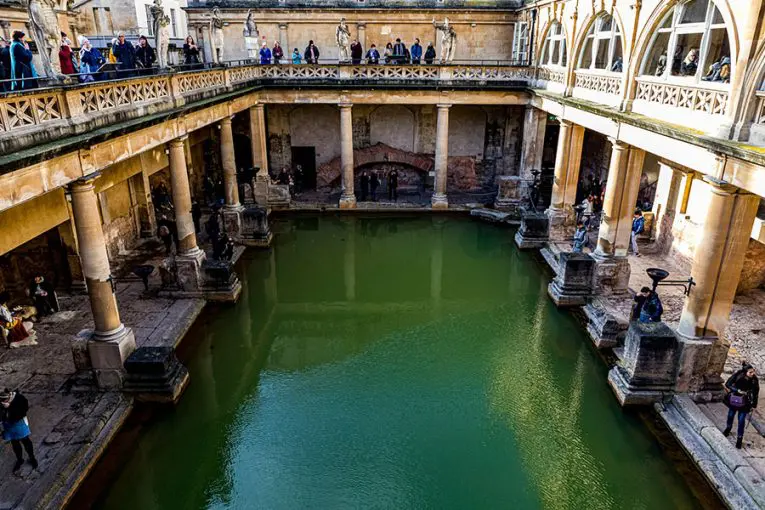
The Roman Baths
The obvious choice for a reason! The Roman Baths are a strong winter option because they’re almost entirely indoors. And, providing you are in Bath when the Christmas market isn’t in town (check dates, but it’s usually mid-November to mid-December), then you’ll likely be able to visit this attraction away from the crowds.
- Opening times: 9am–6pm daily
- Last entry: 5pm
- Parking: There’s no on-site parking, so plan to park outside the centre and walk in
Allow 1.5–2 hours for a comfortable visit, longer if you like to read all of the displays and really absorb the gravitas of the history. Advanced booking is not essential but recommended.
It’s worth timing this as the main activity of the day. It sits well late morning or early afternoon, with lunch either side.
Thermae Bath Spa
The spa is one of Bath’s biggest winter draws, and for good reason. The rooftop pool works particularly well when the air’s cold, even if the day itself is overcast.
- Opening hours (Main Spa): typically 09:00–21:30
- Pool and Wellness Suite close: around 21:00
- Reduced hours and closures apply on public holidays, so check ahead
This is best treated as the focus of the day rather than something you try to fit in quickly. Build time around it rather than around other plans. Again its a good idea to book in advance. Access is in 2-hour slots and although they offer walk-ins on the day, there’s no guarantee space will be available when you turn up without a booking.
Bath has a strong year-round food scene, but winter does change what’s available slightly.
If you’re in town for the Christmas market, there will be many pop-up food stalls serving traditional Christmas fare of British and German origins, alongside the usual mulled alcohols, so it’s worth factoring in at least one lap of the stalls as a light lunch or early-evening snack stop rather than planning a full sit-down meal every time.
It’s also helpful to think about where you eat in relation to your day:
- Near the Abbey and Roman Baths for an easy warm-up before or after sightseeing.
- Up towards the Royal Crescent and Circus if you’re combining food with a stroll through the Georgian streets.
- Around the station or SouthGate for a quick, no-fuss option if you’re arriving late or leaving early.
- Long lunches work well here in winter, especially if you’re spacing out indoor visits and want to avoid being outside during the coldest part of the day.
Where else to visit from Bath?
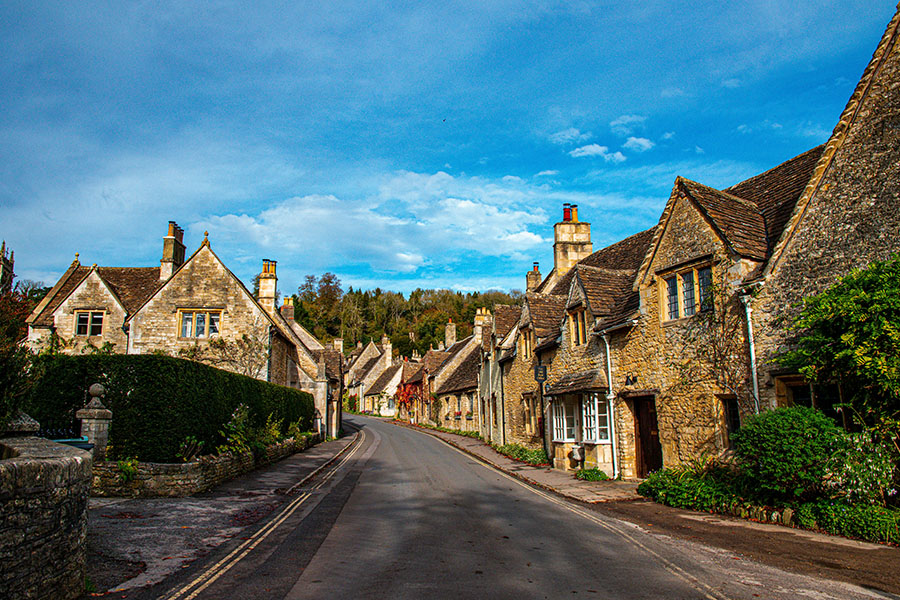
Castle Combe is often busy in summer. In winter, it’s quieter and easier to enjoy for a couple of hours, and your visit might look something like this:
- Short village walk: There’s a great slow loop to be had by crossing the bridge by the By Brook, wandering along the main street past the Market Cross and church, then up one of the side lanes for views back over the stone cottages.
- Lunch: There are some lovely nearby places like Chippenham or Corsham that both give you more slightly more choice and easier parking.
- Race circuit: If you’re a bit of a petrolhead, you can always head to the Castle Combe race circuit that’s nearby. Some days they have events going on (even in winter), and you may even have the chance for a spot of karting.
If you want a countryside base rather than a city stay, Broadway Club Campsite is open all year and works well in winter. However, the key is to take it slow and not be disappointed if you can’t cover the entirety of the Cotswolds in one winter trip.
- Pick one or two towns (Bourton-on-the-Water and Stow-on-the-Wold are particular highlights for whileing away several hours. Alternatively, you could head to the Upper and Lower Slaughters for a small, picturesque village setting without the tourism).
- Allow time for parking and short walks: Even in winter, parking in the most popular villages can be harder to come by than you’d expect, so build in 15–20 minutes’ margin to find a space, pay, and get from the car park to the centre.
- Expect shops to close earlier than in summer: Many independent shops in small Cotswold towns shut by late afternoon on weekdays and sometimes earlier outside school holidays, so plan any browsing for the middle of the day rather than after 4pm.
Kyle of Lochalsh
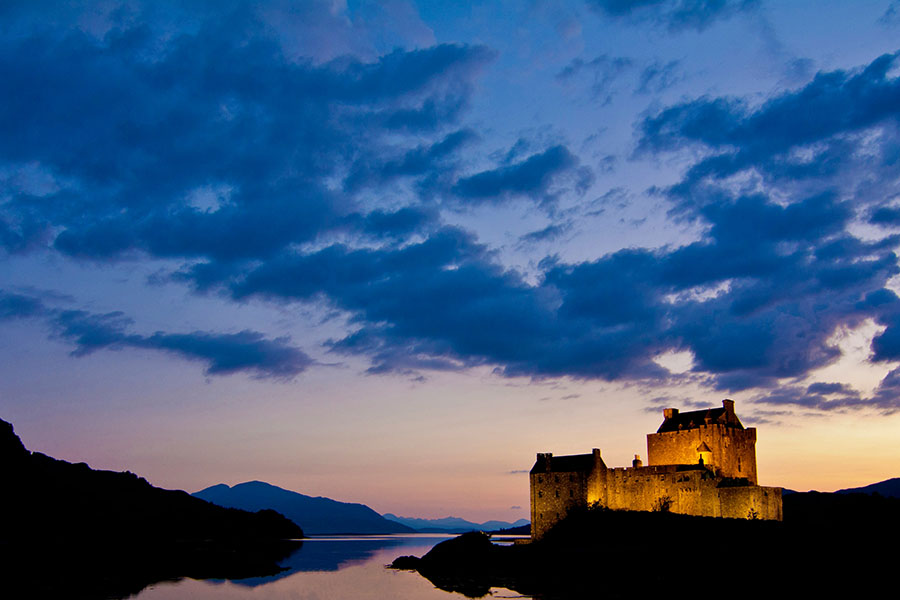
No winter road trip list can be considered complete without at least a passing mention of Scotland. Why? Because there’s always a chance you’ll see the Northern Lights.
Kyle of Lochalsh is in the north west of Scotland, on the mainland side of the Inner Hebrides. It sits at the end of the A87, on the North Coast 500 route, opposite the Isle of Skye, and is one of the main gateways between the Scottish mainland and the island. Hence, it’s a main thoroughfare road trip destination.
The area is closely tied to Scottish Highland history and landscape, with sea lochs, mountains and small coastal routes shaping how people have lived and travelled here for generations. While Kyle itself is a small town, it’s surrounded by places that are significant both historically and geographically.
There isn’t a long list of attractions in the seaside town itself, but it works well as a base. From Kyle, you can reach well-known Highland landmarks, National Parks, and parts of Skye without committing to staying off the mainland, which can make getting off the islands difficult if the weather turns.
Kyle of Lochalsh works particularly well in winter because it gives you flexibility. You can decide each morning whether to stay on the mainland or cross to Skye, depending on the weather and road conditions. With shorter daylight hours and unpredictable weather, having that choice makes planning easier and days feel less pressured.
A good example of the kind of place that works in winter in the Kyle area is Reraig Caravan and Camping. You can find it just east of Kyle on the A87.
This campsite is particularly great for winter, because it has hardstanding pitches with hook‑up. It’s also in the perfect place to use as a base for the Skye Bridge, Eilean Donan Castle and Plockton.
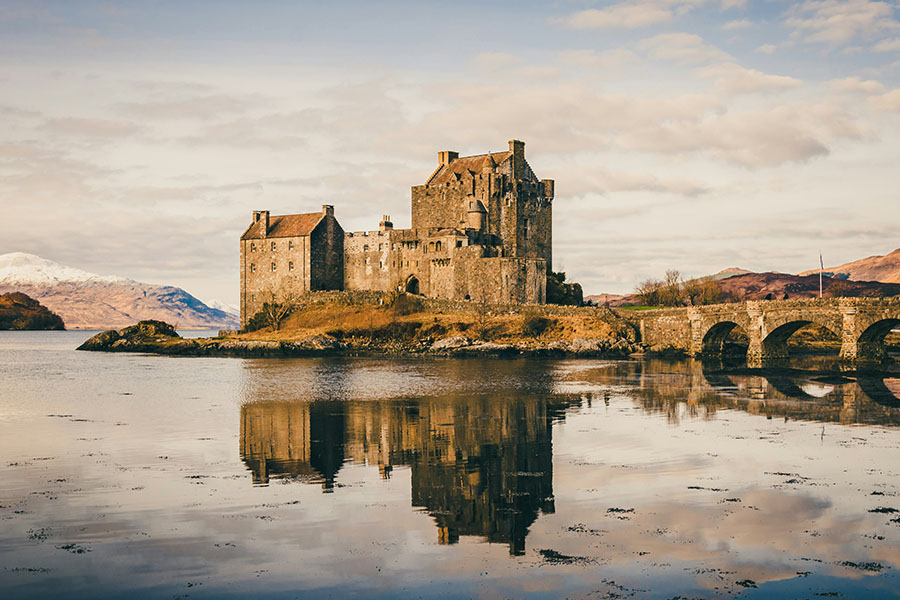
Eilean Donan Castle is one of the most visited attractions in Scotland (and when you get there, you’ll immediately understand why!) It sits on a small island where three lochs meet, and gives you views back towards the mountains.
- Location: around 20 minutes’ drive from Kyle
- Opening times: vary by season, so check in advance
- How long to allow: 1–2 hours works for most people, which is enough time to walk out over the bridge, explore the interior rooms and small exhibitions, and then spend a bit of time on the viewpoints around the car park and café area for photos. If you’d like to get the perfect photographs, the light is often best earlier in the day because you won’t have low sun or lots of shadows in your shots.
Parking is straightforward and close to the castle, with marked bays just off the main road and a short, level walk to the bridge, which makes it an easy stop in colder weather or if conditions are changeable.
Lunch nearby
There are limited food options close to the castle itself, especially in winter. It’s usually better to plan lunch either back towards Kyle or as part of a longer loop.
In winter, opening hours can change at short notice, so it’s sensible to:
- Check opening times on the day
- Carry a simple backup lunch
- Avoid relying on small cafés late in the afternoon
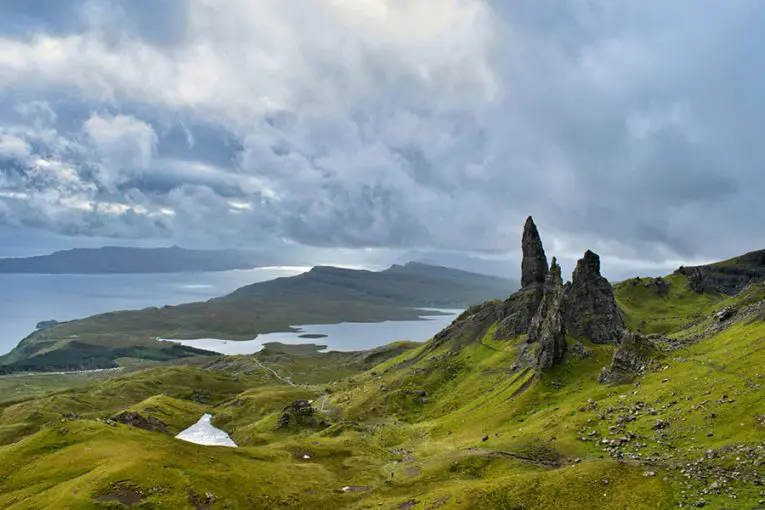
Single-track roads can look clear but still hide ice in shaded passing places.
Slowing right down when pulling over, even when the main road feels fine, can prevent slips most drivers don’t expect.
The main purpose of your trip: The Isle of Skye
Crossing to Skye is straightforward via the Skye Bridge, but winter conditions can make travel slower than expected. Kyle gives you the option to visit Skye without needing to stay on the island itself.
Talisker Distillery
Talisker is a good winter anchor if you want a Skye day that doesn’t rely heavily on outdoor activity.
- Winter opening hours: typically 10:00–16:30 (double check)
- Visit length: allow around 1–1.5 hours for the tour and tasting (you can always ask to take samples away if you’re driving), plus a little extra time to look around the shop or take a few photos outside if the weather allows.
The distillery is indoors and structured, which works well in colder weather: you are mostly in warm spaces, following a guided route, with only short transitions between buildings, if any.
The drive over is scenic, but the roads are narrow, often single-track with passing places, and slower than they look on a map, especially in winter conditions, so it’s sensible to leave a generous buffer and avoid booking the very last tour of the day.
Built & tested the Bailey way
Every Bailey is shaped by more than 75 years of British design and engineering.
| All-Weather Touring (Grade III) |
| All Bailey models are designed for year-round use, with insulation and heating tested to cope with colder conditions. That means more consistent comfort, even when temperatures drop. |
| Cold-chamber tested down to -15°C |
| Every Bailey vehicle undergoes cold-chamber testing to make sure the interior stays at a comfortable temperature, even when the outside gets freezing. |
| Effective, well-distributed heating |
| A warm living space matters more in winter than any view. Bailey layouts and heating systems are designed to maintain an even temperature, so evenings and mornings feel comfortable just like being at home. |
Thinking about your next trip?
If winter touring is on your mind, it’s worth taking a look at the full Bailey range of caravans, motorhomes and campervans. They’re all designed for comfortable travel throughout the year.
And if you’re still in the planning stage, you’ll find more practical guides, destination ideas and touring advice over on the Bailey blog.
Latest news & events
See all news & eventsChipping Sodbury's Exclusive November Deals
BADMINTON ROAD, CHIPPING SODBURY, BRISTOL